
Midcap Index Funds in India: What to Check Before You Invest
Most midcap index funds in India track the Nifty Midcap 150, so their portfolios are nearly identical. What sets them apart is cost and tracking quality, so the best choice is the fund with a low expense ratio, a small tracking difference and low tracking error, not the one with the highest recent return.
If you've been investing in large-cap index funds for a while and are now looking to get more exposure to the growth-oriented mid-cap segment, a midcap index fund is one of the simplest ways to add it.
Mid-cap companies sit between large-cap and small-cap stocks in terms of market capitalisation. They can offer higher growth potential than established large-cap companies, but they also tend to come with higher volatility. A mid-cap index fund gives you exposure to a broad basket of these companies without having to pick individual stocks yourself.
In this guide, we'll look at some of the best midcap index funds in India in 2026, understand how the Nifty Midcap 150 works, and compare mid-cap index funds with actively managed mid-cap funds. We'll also cover the factors you should consider when choosing the best midcap index fund, including expense ratio, tracking error, tracking difference, and your investment goals.
Let's get started.
What are midcap index funds?
Mid-cap index funds are mutual funds that passively track a mid-cap index, such as the Nifty Midcap 150. Instead of a fund manager actively choosing stocks, the fund invests in the companies that make up the index, broadly following their respective weights.
This means you're not relying on a fund manager to identify individual winners or decide when to buy and sell stocks. The fund's goal is simply to replicate the performance of its benchmark, minus costs and tracking differences. Since there's less active management involved, mid-cap index funds generally have lower costs than actively managed mid-cap funds.
Mid-cap companies are often businesses that have moved beyond the early stages of growth but still have room to expand. Some may be entering new markets, scaling their operations, or gaining market share. This growth potential can make the mid-cap segment attractive to long-term investors, although it also comes with more volatility and market risk than large-cap investing.
A mid-cap index fund gives you exposure to a broad basket of these companies through a single investment. Instead of researching and buying individual mid-cap stocks yourself, you can invest across companies from sectors such as financial services, industrials, healthcare, technology, consumer goods, and others through one fund.
For investors who want mid-cap exposure but don't want to actively pick stocks, a mid cap index fund SIP can be a relatively simple way to invest for the long term.
Learn how Index mutual funds work
What is the Nifty Midcap 150 index?
The Nifty Midcap 150 index tracks 150 mid-cap companies ranked 101 to 250 by full market capitalisation within the Nifty 500 universe. These companies fall between the large-cap and small-cap segments of the Indian stock market.
The index is designed to represent the performance of India's mid-cap segment across different sectors. Instead of investing in just a handful of mid-cap companies, the index spreads exposure across 150 stocks, helping investors diversify their investment within the segment.
The Nifty Midcap 150 is reviewed and rebalanced periodically. This means the companies and their weightages can change as their market capitalisation changes. For example, a company that grows enough to move into the large-cap segment may eventually move out of the index, while another company can enter as its market capitalization increases.
This is also why the Nifty Midcap 150 index fund is a popular choice for investors looking for passive exposure to mid-cap stocks. Most of the leading mid-cap index funds in India are designed to track this benchmark, making the index an important factor to consider when comparing different funds.
Read more on Nifty Midcap 150 index
Best midcap index funds in India in 2026
If you're looking for the best midcap index funds in India in 2026, there are several options that track the Nifty Midcap 150 Index. Since these funds follow the same underlying index, their portfolios are broadly similar. The differences usually come down to factors such as expense ratio, tracking error, tracking difference, fund size, and how easily you can invest in the fund.
Here are some of the top mid cap index funds in India worth considering:
Nippon India Nifty Midcap 150 Index Fund
Launched in February 2021, the Nippon India Nifty Midcap 150 Index Fund is one of the more established funds in this category. It invests in the stocks that make up the Nifty Midcap 150 and aims to closely replicate the index.
As of June 2026, the direct plan had delivered a 5-year annualised return of 17.77%, compared with 18.28% for the Nifty Midcap 150 TRI. This difference is worth looking at when evaluating an index fund because it shows how closely the fund has tracked its benchmark.
The fund also has a low minimum investment, making it accessible if you're starting with a small mid cap index fund SIP.
Motilal Oswal Nifty Midcap 150 Index Fund
The Motilal Oswal Nifty Midcap 150 Index Fund is another popular option for investors looking for passive exposure to the mid-cap segment.
Since it tracks the same Nifty Midcap 150 index as other funds in this category, don't choose it simply because of its recent returns. Instead, compare its expense ratio, tracking error and tracking difference with competing funds.
A fund that consistently stays close to its benchmark can be more important than one that happens to have the highest return over a particular period.
SBI Nifty Midcap 150 Index Fund
The SBI Nifty Midcap 150 Index Fund offers another way to invest in the Nifty Midcap 150 through a large and established fund house. The scheme was launched in October 2022 and is available in both Direct and Regular plans.
Its direct-plan expense ratio has been around the 0.40% level, although investors should always check the latest figure before investing.
For a relatively newer fund, it can be more useful to focus on its tracking performance and how consistently it follows the index rather than putting too much weight on its short-term return history.
UTI Nifty Midcap 150 Index Fund
The UTI Nifty Midcap 150 Index Fund is another option for investors who want passive exposure to the Nifty Midcap 150.
As with the other funds on this list, the underlying portfolio is largely determined by the index. This means you don't need to choose a fund based on which AMC you think will identify the next big mid-cap stock. Instead, compare the fund's costs and tracking performance before making a decision.
Aditya Birla Sun Life Nifty Midcap 150 Index Fund
The Aditya Birla Sun Life Nifty Midcap 150 Index Fund is another fund tracking the Nifty Midcap 150. It can be considered by investors who want a straightforward passive approach to mid-cap investing.
When comparing it with other Nifty Midcap 150 index fund options, look beyond the fund's recent returns. Expense ratio, tracking difference, tracking error and fund size can give you a better idea of how efficiently the fund is following its benchmark.
What about Nifty Midcap 150 ETFs?
You can also get exposure to the Nifty Midcap 150 through exchange-traded funds (ETFs). Options include ETFs from fund houses such as Mirae Asset, Zerodha and ICICI Prudential.
ETFs can have lower expense ratios than index mutual funds, but they work slightly differently. You need a demat and trading account to buy and sell them on the stock exchange, and your actual buying or selling price can differ from the ETF's NAV because of market liquidity and bid-ask spreads.
For most investors starting a mid cap index fund SIP, a mutual fund may be simpler. If you already use a demat account and understand how ETFs work, an ETF can be another option.
How to choose the best midcap Index Fund
If multiple funds are tracking the same Nifty Midcap 150 Index, how do you decide which one to invest in? You don't need to analyse dozens of factors. A few key metrics can help you narrow down your options.
Expense Ratio
The expense ratio is the annual fee charged by a mutual fund for managing your investment. Since most mid-cap index funds are tracking the same index, a lower expense ratio can help you retain more of your returns over the long term.
For example, if two funds have similar tracking performance but one charges 0.20% and the other charges 0.40%, the lower-cost fund has an advantage. The difference may look small, but costs can compound over a long-term investment.
That said, don't choose a fund based on expense ratio alone. A slightly cheaper fund isn't necessarily better if it consistently lags its benchmark.
Tracking error and tracking difference
These are two of the most important metrics to look at when choosing a best Nifty Midcap 150 index fund.
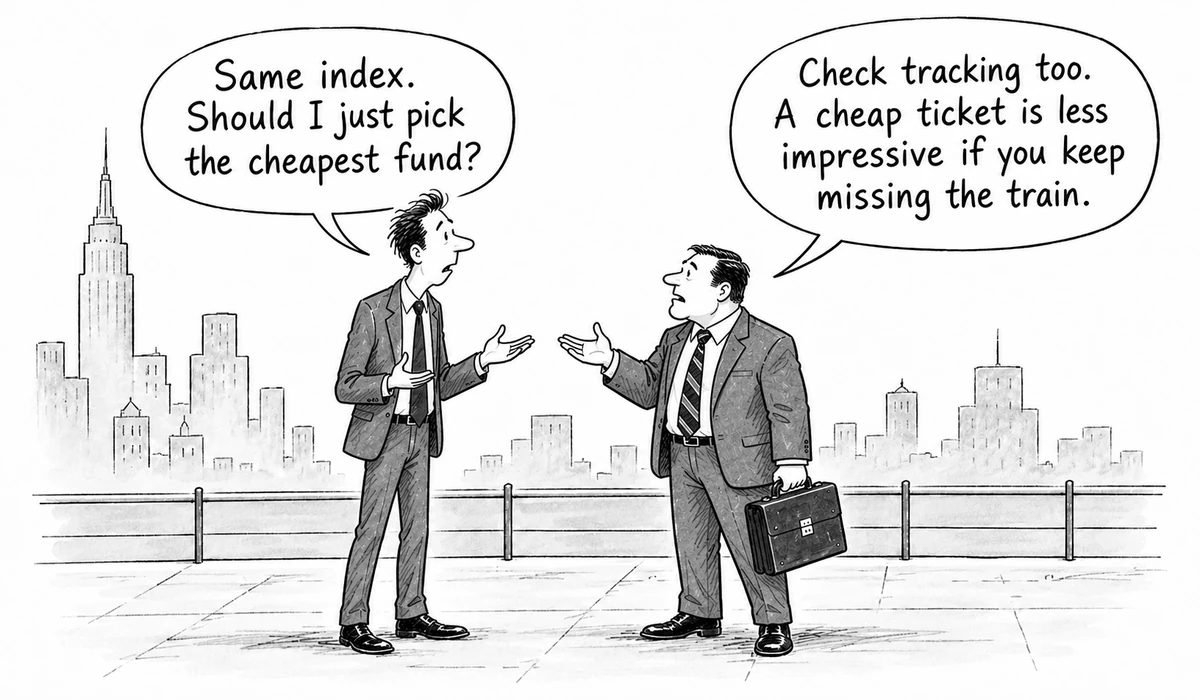
Tracking error measures how much the fund's returns fluctuate away from the index's returns over time. A lower tracking error generally indicates that the fund is doing a better job of replicating its benchmark.
Tracking difference measures the actual difference between the fund's return and the index's return over a specific period. For example, if the index returns 15% and the fund returns 14.6%, the tracking difference is -0.4%.
Ideally, you want both measures to be low. This is particularly important for index funds because the objective isn't to outperform the benchmark, it's to track it as closely as possible.
This is also why looking only at the expense ratio can be misleading. A fund with a slightly higher expense ratio but better tracking could potentially deliver a better outcome than a cheaper fund that consistently lags its benchmark.
Fund size or AUM
A fund's assets under management (AUM) tell you how much money investors have collectively invested in the scheme. A larger AUM can indicate that the fund has attracted more investors and has been able to build scale.
However, bigger isn't automatically better. Don't reject a fund simply because it has a lower AUM, particularly if it has a reasonable track record and tracks its benchmark efficiently.
For index mutual funds, tracking performance and costs are generally more useful factors to compare.
Fund house track record
While index funds don't depend on a fund manager's ability to pick winning stocks, the AMC still has to execute the fund efficiently.
When comparing top mid cap index funds in India, look at how consistently the fund house manages its other passive funds. Factors such as tracking quality, fund operations and cost management can give you a better idea of how efficiently the AMC handles index funds.
Minimum investment and SIP flexibility
If you're planning a mid cap index fund SIP, check the minimum SIP amount before investing. Many funds allow you to start with relatively small amounts, often ₹100 to ₹500.
This makes them accessible even if you don't have a large amount to invest upfront. You can start with a small systematic investment plan (SIP) and increase the amount as your income and investment capacity grow.
If you prefer a one-time investment, also check the minimum amount required for a lump sum investment.
Don't pick a fund just because it has the highest returns
This is one of the easiest mistakes to make when comparing index funds.
Since most funds in this category track the same Nifty Midcap 150 Index, their long-term returns should generally be similar before costs and tracking differences. A fund that has topped the return charts over one or two years isn't necessarily going to remain the top performer.
Instead, look for a combination of reasonable costs, low tracking difference, consistent tracking performance, and an investment process you can stick with for the long term.
Learn how the tracking error works
Midcap Index Funds vs active midcap funds
If you're deciding between a mid cap index fund vs active mid cap fund, the choice isn't simply about which one gives higher returns. It comes down to how much you're willing to pay for the possibility of outperforming the market and how much involvement you want from a fund manager.
An active mid-cap fund has a fund manager who researches and selects stocks within the mid-cap universe with the goal of beating its benchmark. If the manager's stock selection works, the fund can potentially outperform the index.
The trade-off is cost. Active mid-cap funds generally have higher expense ratios than index funds because you're paying for research, portfolio management and active decision-making. Index funds, on the other hand, follow the benchmark and therefore typically have lower costs.
Here's how the two approaches compare:
So, which one should you choose?
If you want low-cost exposure to the mid-cap segment and don't want to spend time evaluating fund managers, a mid-cap index fund can be a straightforward choice. You know which benchmark you're investing in and can focus on factors such as expense ratio and tracking difference.
If you're comfortable paying a higher fee for the possibility of beating the benchmark and have confidence in a particular fund manager's investment approach, an active mid-cap fund may be worth considering. However, don't judge an active fund solely by its recent returns. Look at how it has performed across different market cycles and whether its outperformance has been consistent after accounting for costs.
You also don't necessarily have to choose one or the other. Some investors use an index fund as their core mid-cap allocation and add an active fund if they have a strong reason to back a particular investment strategy.
Benefits of investing in midcap index funds
Mid-cap index funds can be useful for investors who want exposure to the growth potential of mid-sized companies without having to research and select individual stocks. Some of the key benefits include:
Lower cost: Since index funds follow a predefined benchmark instead of relying on active stock-picking, they generally have lower expense ratios than actively managed mid-cap funds. This can matter over a long-term investment horizon. Even small differences in costs can add up over several years, particularly when you're investing through a SIP and allowing your investment to compound.
Diversification: A Nifty Midcap 150 index fund gives you exposure to a broad basket of 150 companies across different sectors through a single investment. This means you're not relying on the performance of one or two mid-cap stocks. If one company underperforms, its impact on your overall portfolio is limited by its relatively small weight in the index. However, diversification doesn't remove market risk. Since all the companies belong to the mid-cap segment, the fund can still experience significant volatility during a market downturn.
Transparency: Index funds are relatively straightforward to understand because their investment strategy is based on a publicly available benchmark. You can see which companies make up the Nifty Midcap 150 and understand the broad portfolio that your fund is designed to replicate. This makes it easier to know what you're investing in compared with an actively managed fund, where the portfolio can change based on the fund manager's decisions.
Less dependence on fund manager decisions: With an active fund, the fund manager's stock selection and investment decisions can have a significant impact on performance. A change in the fund manager or investment strategy can also affect how the fund is managed. A mid-cap index fund doesn't depend on one manager's ability to identify winning stocks. Its portfolio is largely determined by the index methodology, which can make the investment approach more consistent.
Exposure to the midcap growth segment: Mid-cap companies can offer investors exposure to businesses that are still expanding and have the potential to grow into larger companies over time. This can make the mid-cap segment an interesting part of a long-term portfolio for investors who can tolerate higher volatility and don't need the money in the near term. However, growth potential comes with risk. Mid-cap stocks can experience sharper price movements than large-cap stocks, so investors should be prepared for periods of significant volatility rather than expecting steady returns.
Risks of midcap Index funds
It's worth being upfront about this. Mid-cap index funds aren't a "safe" investment. Like other equity funds, they can experience significant losses during market downturns, and they generally carry more volatility than large-cap funds.
- Volatility: Mid-cap stocks can swing more sharply than large-caps in both directions. Be prepared for deeper drawdowns during market corrections.
- Market risk: A mid-cap index fund is designed to track its benchmark, so it cannot move to cash or avoid falling stocks during a downturn. When the Nifty Midcap 150 falls, the fund is likely to fall as well.
- Tracking difference: No index fund can perfectly replicate its benchmark. Expenses, transaction costs, cash holdings and other factors can cause the fund's returns to differ slightly from the index.
- Concentration within mid-caps: While the index provides exposure to 150 companies, some sectors can have larger weightages than others. This means diversification doesn't completely eliminate sector-level risk.
This is why risk tolerance and time horizon matter before investing in this segment. If you may need the money in the next few years or are uncomfortable with large temporary losses, a mid-cap index fund may not be the right fit for that goal.
Who should invest in midcap Index Funds?
Mid-cap index funds can be a good fit for investors who:
- Have a long-term investment horizon of at least 5 to 7 years and can stay invested through periods of market volatility.
- Already have a large-cap or Nifty 50 index fund as a core holding and want to add exposure to the growth-oriented mid-cap segment.
- Have moderate-to-high risk tolerance and can stay invested even when their portfolio experiences a significant drawdown.
- Prefer a low-cost, hands-off approach rather than actively researching stocks or tracking fund manager decisions.
For example, if you're investing through a mid cap index fund SIP for a long-term goal such as building wealth or creating a retirement corpus, short-term market fluctuations may be easier to handle because you have more time to stay invested.
On the other hand, if your goal is less than 3 to 5 years away, or you know that a sharp fall in your portfolio would make you want to sell, mid-cap funds may not be suitable for a large part of your portfolio. Your risk tolerance and investment horizon should determine how much exposure you take to this segment.
How to invest in midcap Index Funds
You have two broad routes:
- Systematic Investment Plan (SIP): Investing a fixed amount at regular intervals, regardless of market levels. This can be a disciplined way to invest in a volatile segment like mid-caps, as you're spreading your purchases across different market levels instead of relying on a single entry point.
- Lump sum investment: Investing a larger amount at once. This can work if you have surplus funds and a long-term investment horizon, but it comes with more timing risk because mid-cap stocks can be volatile.
Read more: Systematic Investment Plan
FAQs about the best midcap Index Funds in India
What is the best mid-cap index fund in India right now?
There isn't one single best midcap index fund for everyone. Compare Nifty Midcap 150 index funds based on expense ratio, tracking difference, tracking error, fund size and investment convenience rather than choosing purely based on past returns.
Is a mid-cap index fund riskier than a large-cap index fund?
Yes. Mid-cap stocks generally experience higher volatility than large-cap stocks, so a mid-cap index fund can see sharper price movements and larger drawdowns during market corrections.
Can I start a mid-cap index fund SIP with a small amount?
Yes. Many mid-cap index funds allow SIPs starting from ₹100 to ₹500 per month. Check the specific fund's latest minimum investment requirement before starting your SIP.
How long should I stay invested in a mid-cap index fund?
A long-term investment horizon of at least 5-7 years is generally more appropriate for mid-cap funds because they can experience significant short-term volatility. However, a longer horizon doesn't eliminate market risk or guarantee returns.
Do mid-cap index funds guarantee higher returns than active funds?
No. A mid-cap index fund is designed to track its benchmark, not outperform it. An active mid-cap fund may outperform the index, but consistent outperformance after fees is difficult. The right choice depends on whether you prefer a low-cost passive approach or are willing to take active-management risk.
What's the difference between tracking error and tracking difference?
Tracking error measures the volatility of the difference between a fund's returns and its benchmark returns. Tracking difference measures the actual gap between the fund's return and the index return over a specific period. For an index fund, lower tracking error and a smaller tracking difference are generally preferable.
Disclaimer: This article is for educational purposes only and does not constitute investment advice. Investments in securities markets are subject to market risks; read all related documents carefully before investing.