
SIP Stoppage Ratio Trends and Investor Sentiment in India
India has never had more people running SIPs than it does right now. As of August 2026, there are 10.75 crore active accounts, and monthly contributions just hit an all-time record, Rs 32,297 crore, up 14% from a year ago.
Sitting right next to that record, though, is a quieter number that tells a very different story. In March 2026, the SIP stoppage ratio, how many SIPs got shut down against how many got started, crossed 100%. More SIPs closed than opened, in the very same month the industry was posting record inflows.
How does the SIP stoppage ratio move with market fear?
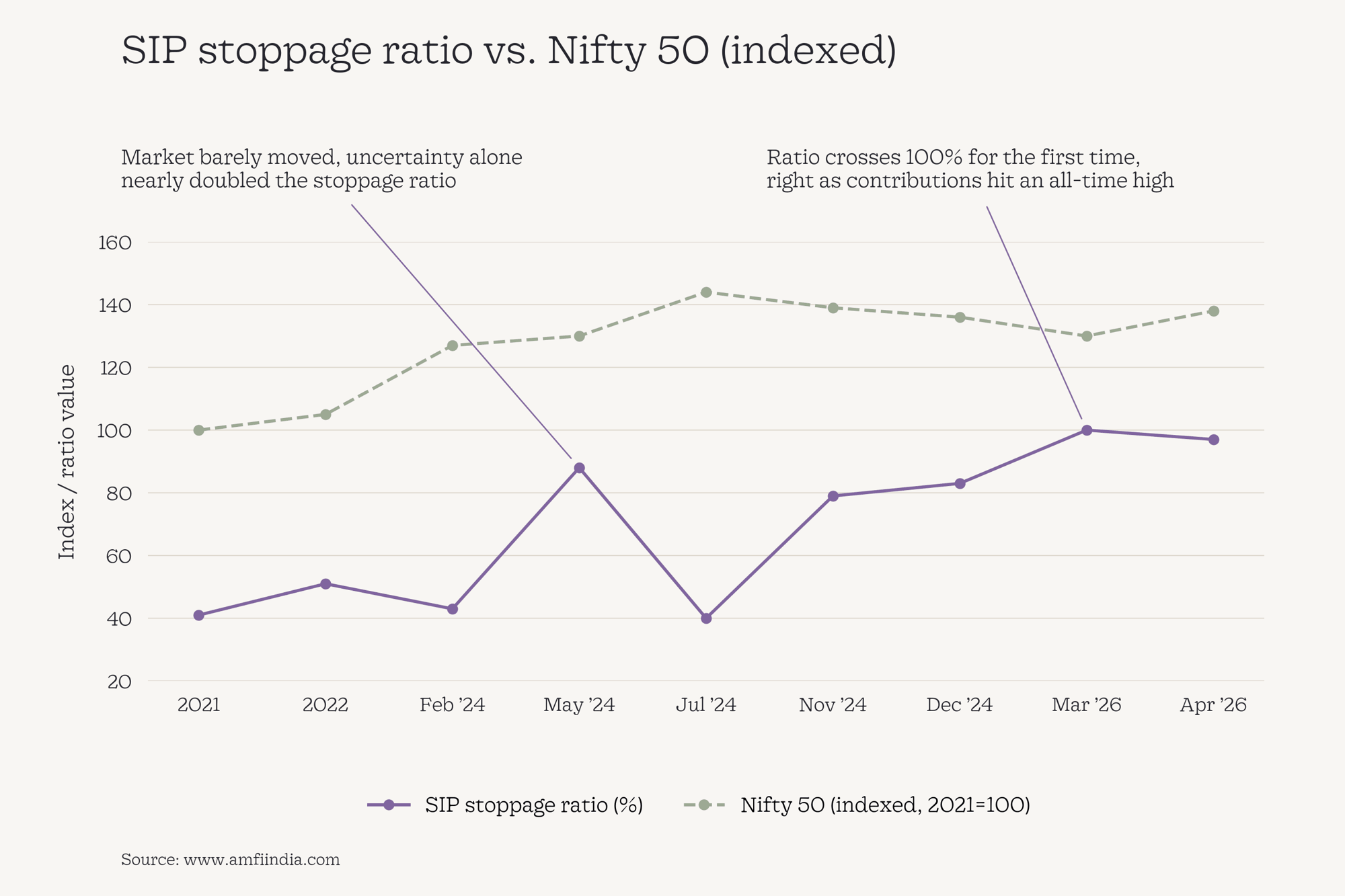
Look at this ratio over the last five years, and one thing becomes obvious fast. It doesn’t move on its own. It moves with fear.
Source: www.amfiindia.com
In 2021, a calm, rising market, the ratio sat at a steady 41%. By 2022, as the market turned choppy, it climbed to 51%. Come February 2024, markets had settled again, and the ratio drifted back down to a 27-month low of 43%. Then election uncertainty hit in May 2024, and even though the market itself barely moved that month, the ratio nearly doubled, to 88%. Two months later, once the uncertainty passed and the market resumed its rally, it was back down near 40%.
The clearest version of this shows up later that year. The Nifty hit a fresh high in September 2024, then corrected over 8% by December. Right on cue, the stoppage ratio climbed back into the high 70s and 80s. And in early 2026, when the market fell again, this time over 13% from its recent peak, the ratio crossed 100%.
The pattern is hard to ignore. Spikes in the ratio have coincided with market falls and periods of uncertainty, while calmer, rising markets have generally seen it ease. The relationship isn't proof that markets alone drive SIP stoppages, but it tells us something important about how investor behaviour changes when confidence is tested.
Which tells you something the record-inflow headline never will. The amount of money going into SIPs each month says almost nothing about how scared the people behind that money currently are. Those are two separate numbers, moving for two separate reasons, and mistaking one for the other means missing the part of the story that actually matters to you as an individual investor.
Because here’s the uncomfortable part. This chart isn’t really about the industry. It’s a fear gauge, and every reader looking at it has, at some point, been a data point on that rising line.
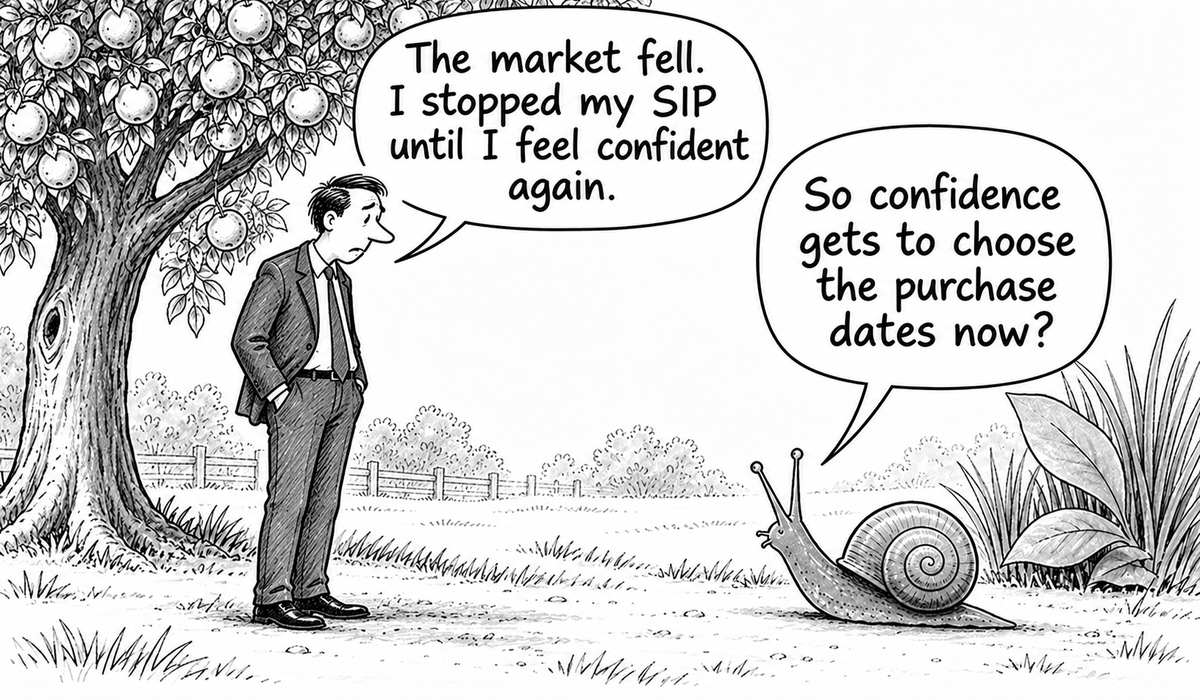
The real cost of stopping your SIP
It’s worth asking what stopping actually costs. Go back to the Covid crash of March 2020. Someone who kept a Rs 10,000 monthly SIP going through the following twelve months invested Rs 1.2 lakh during an extraordinary period of uncertainty. Some instalments were bought when prices were deeply depressed; others went in as markets recovered. The point wasn't to identify the bottom. It was to keep investing without having to.
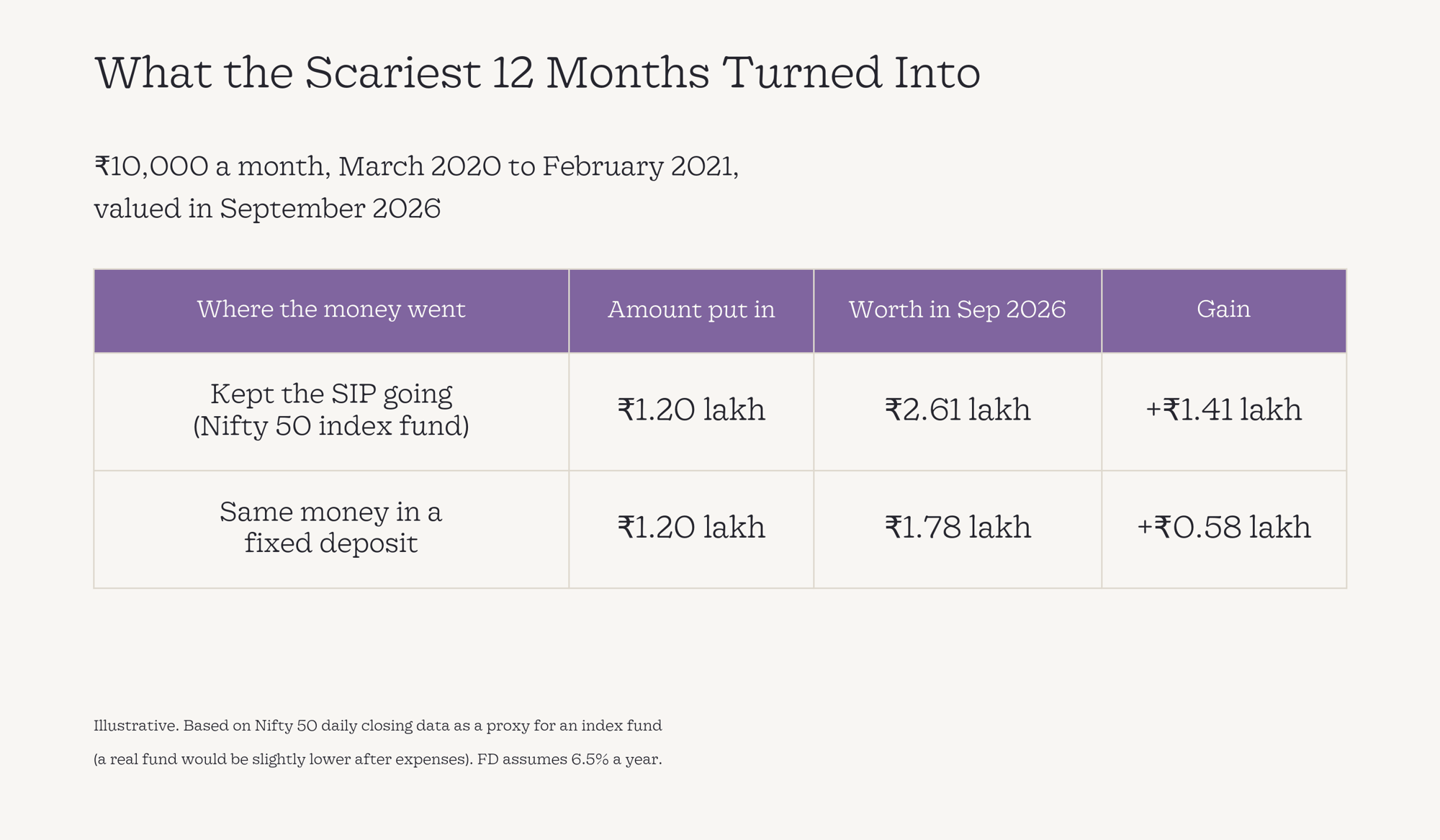
That doesn’t mean every instalment pays off quickly. With the market in another correction right now, investors who kept going are back in the uncomfortable stretch, and the payoff on money put in during fear has almost always shown up later, not during. That’s the whole bargain.
Why SIPs became the default advice, and why switching rarely helps
There’s a reason SIPs became the default advice in the first place. It’s the simplest long-term equity plan most investors can actually stick to, a fixed amount, a fixed date, no decisions to make, no timing calls to get wrong. That simplicity is the whole point.
So, if you’re the kind of investor who keeps stopping and starting, it’s worth asking what the alternative actually looks like. Lumpsum investing demands you get the timing right, which is precisely the skill that panics people out of SIPs in the first place. Picking individual stocks demands far more conviction and far more risk than a diversified index ever will. Moving to debt or cash may make sense for money you need in the near term, but switching out of equity simply because markets have fallen can undermine long-term goals.
None of these choices is automatically wrong. But none solves the underlying problem if the real issue is discomfort with market volatility.
Which leaves an uncomfortable conclusion. Ditching the SIP doesn’t solve the fear problem, it just trades a simple plan you occasionally abandon for a harder plan you’ll probably abandon too, with less to show for the years you did stick with it.
Disclaimer: This article is for educational purposes only and does not constitute investment advice. Investments in securities markets are subject to market risks; read all related documents carefully before investing.