
Multibagger Stocks: Why Bet Size and Drawdowns Matter More Than the Story
Somebody, somewhere, is telling you about a stock right now. Something they got into a couple of years back, before anyone else was looking at it. It’s up 8x since then. Maybe 15x.
You've heard some version of this story. And notice what actually gets you excited about it. It's rarely the number. It's the plot, that they saw something before the world did, that they held on while everyone else doubted them.
That's the multibagger story. And it's seductive. But it quietly skips the one question that actually decides whether that story helps you or wrecks you.
The Question Multibagger Stories Skip: Bet Size
How much did they actually invest in it?
Almost nobody asks this, and it matters more than the tip itself.
· A 15x on 1% of your capital, great story, barely moves your net worth.
· A 15x on 30% of your capital, and your life changes.
· But that same 30%, if the stock goes to zero instead, changes your life too, just the other way.
The stock has no idea which outcome it’s going to deliver. Only your bet size decides how much either outcome actually matters to you.
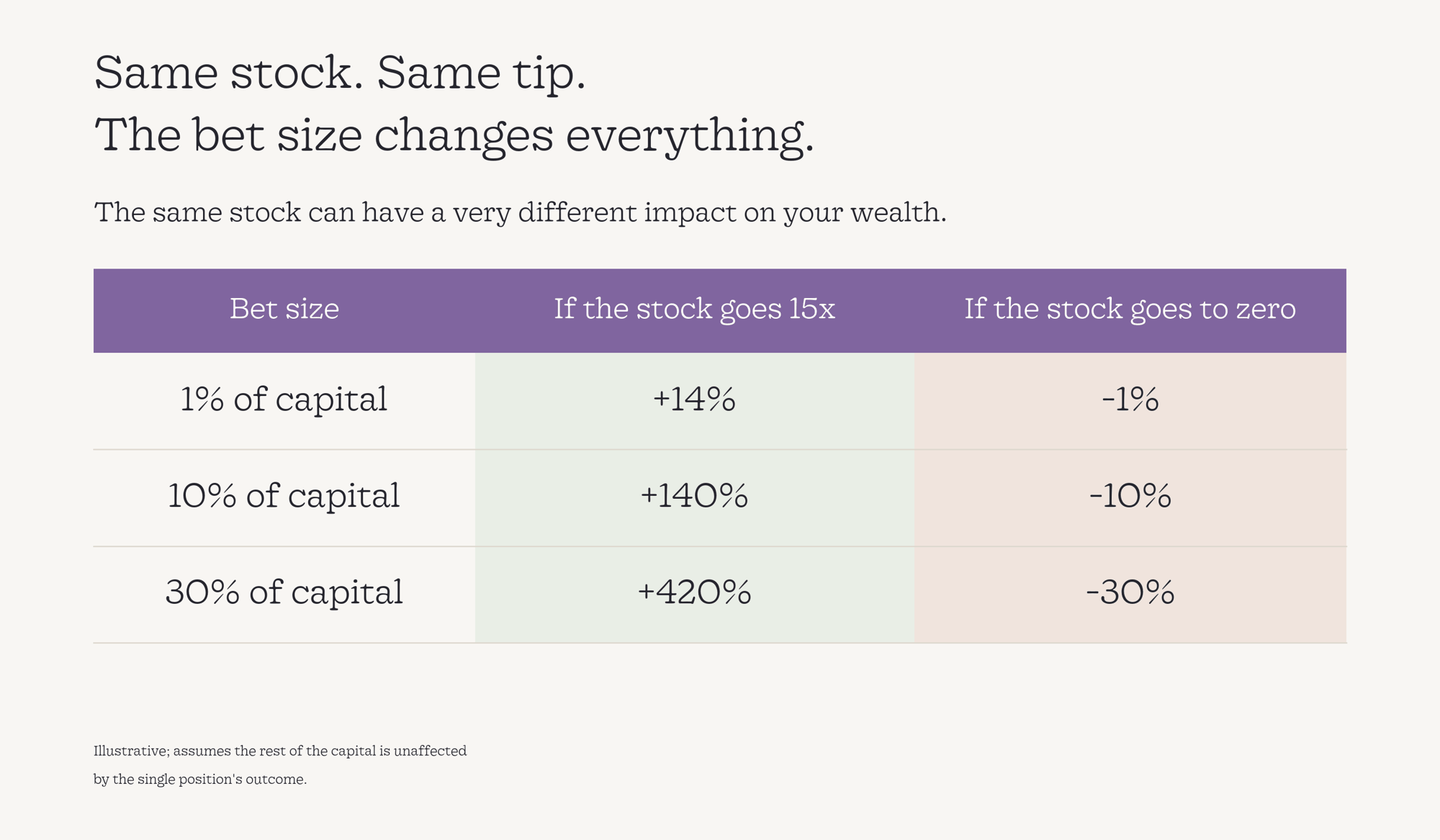
Too small, and even a real multibagger doesn't move the needle - you got the story, not the outcome. Too large, and a permanent loss of capital can wreck your plan.
Most people never actually sit down and choose their bet size.
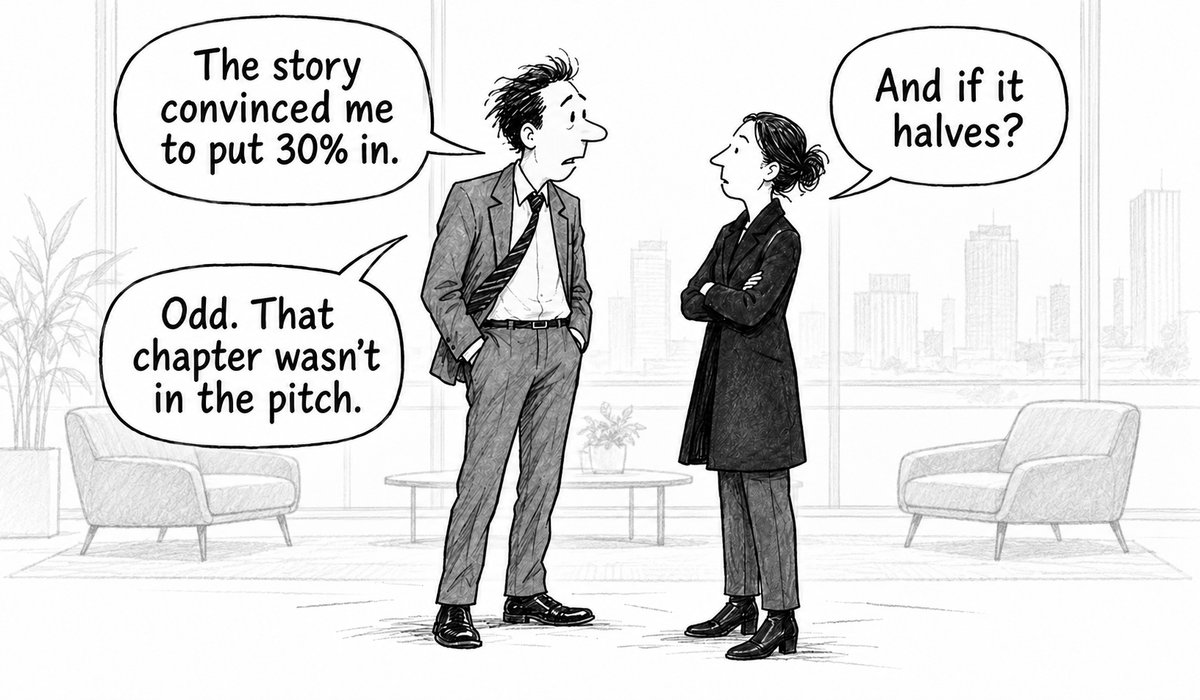
It just happens, whatever felt ‘comfortable enough’ at the time, maybe depending on how convinced the story made them feel and perhaps not to how much they could genuinely afford to lose.
How far can a multibagger stock fall? The Bajaj Finance drawdowns
And here's the part the story conveniently leaves out.
Even the real multibaggers put their believers through the wringer, again and again, not just once.
Take Bajaj Finance, one of Indian markets' most celebrated wealth creators. In the 2008 financial crisis, the stock fell more than 90%. A decade on, in 2018, when the IL&FS default triggered a credit crisis across NBFCs, it lost roughly a third of its value in under two months. In the Covid crash of March 2020, it fell again, around 42%. And as recently as early 2026, it corrected close to 24% from its highs.
Four separate, serious drawdowns in under two decades, in a stock people love to hold up as the textbook multibagger.
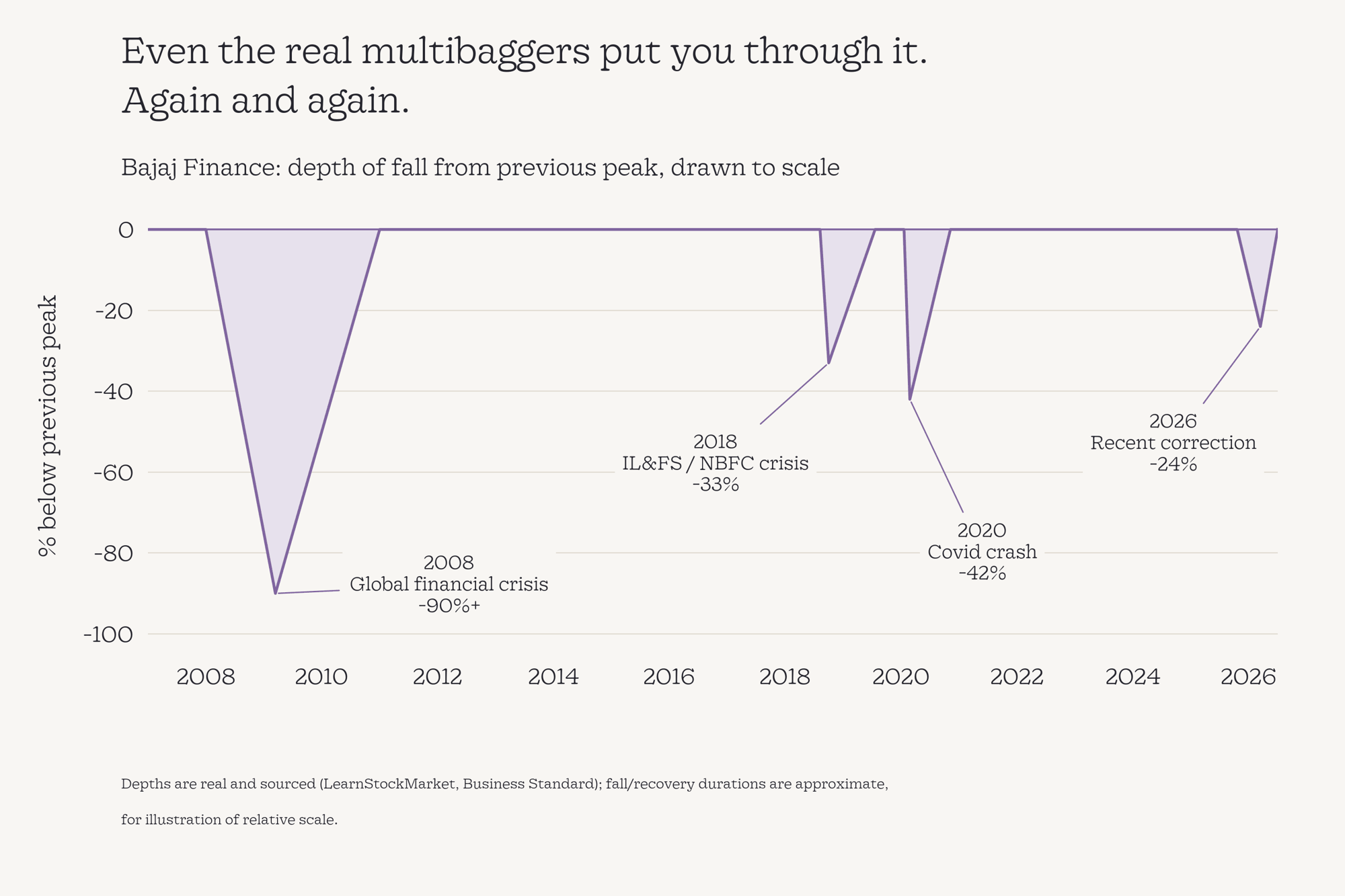
None of that is a story about a bad stock. It's the actual drawdown history of one of the most celebrated compounders in Indian markets.
Why is it so hard to hold through a drawdown?
And on paper, ‘by and hold’ sounds simple enough.
In practice, when it's real money and a 90% fall, or even a 24% one, sitting in your account, every single one of those crashes feels like the story is over. That’s the real test. It's not a one-time test of nerve, it's multiple tests, spaced years apart, almost designed to make you feel miserable and question whether you should have believed in this idea in the first place.
That’s why the decision that matters is not just which stock. It’s how much you should bet.
Disclaimer: This article is for educational purposes only and does not constitute investment advice. Investments in securities markets are subject to market risks; read all related documents carefully before investing.