
Best Date for SIP: Does It Really Matter? What the Data Says
Before almost every investor starts an SIP, the same question comes up. Should it be the 1st of the month? The 5th? The 25th? Or should you wait for a dip in the markets before starting your SIPs?
It feels like this question has a right answer. Pick wrong, and surely, you’re leaving money on the table? So, people read, ask around, and even put off starting while they decide.
Here’s the surprising part. Researchers have looked at this closely, and the answer is far less dramatic than the question.
Does the SIP date really change your returns?
Whiteoak Capital Mutual Fund’s 2026 SIP study ran SIPs on every date of the month, using Sensex data from August 1996 to May 2026. It found no meaningful difference between the start, middle and end of the month. SIPs begun in the first week averaged between an IRR of 13.37% and 13.40%, and mid-month SIPs about the same.
In 2024, Zerodha Fund House looked at over 18 years of Nifty index data from April 2005 to March 2024. It tested SIP start dates on different dates of the month as well as different investment frequencies - daily, weekly and monthly. The study concluded that the difference in historical returns was insignificant and investors should choose a date and frequency that best matched their cashflows.
That makes sense once you think about it. Over a long investment horizon, the exact date you invest tends to matter far less than investing regularly and staying invested. What really matters is whether you showed up - month after month, year after year. The broader lesson is that a good SIP is more about starting early, investing regularly and staying invested for the long term than about date, frequency or the stage of the market cycle.

Should you wait for a market dip to start your SIP?
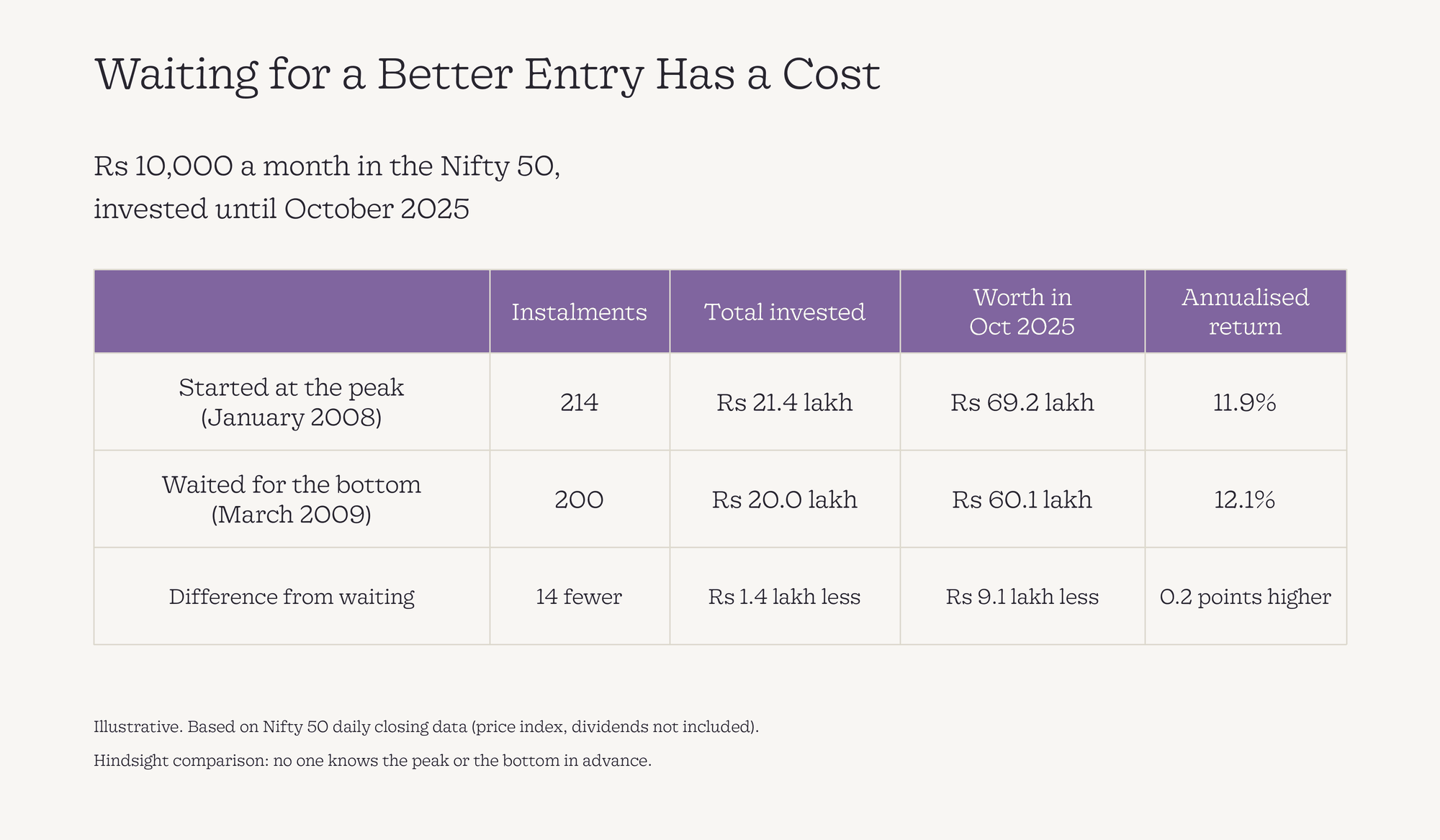
Waiting for a better entry doesn't help either. In the same research, investors who started at market bottoms earned a slightly higher percentage return. But those who started right at the peak ended up with far more money, because they kept buying all the way down while the other investor was still waiting. You can't spot the peak in advance, and you don't need to. The point is that waiting has a cost.
What actually helps when you start a SIP?
Two small things make your SIP work better.
Choose a date 2 to 3 days after your salary arrives. The study’s practical advice is to go with the day your salary is credited. I’d add a small cushion. Salaries may get delayed a day or two, which may lead to a missed SIP due to balance insufficient. You may even incur a bank charge for the same. Two to three days covers that. Don’t stretch it much longer, though. The longer the money sits in your account, the more likely it gets spent on something else.

Increase the SIP amount when you can. The date on which you start an SIP may move your return by hundredths of a percent. The amount you put in decides what you actually build. When your income goes up, let your SIP go up with it. It’s easy to intend and easy to forget. Few investors have the discipline to regularly increase their amounts by themselves.
Disclaimer: This article is for educational purposes only and does not constitute investment advice. Investments in securities markets are subject to market risks; read all related documents carefully before investing.